Window Installation in San Bernardino, CA

Notes on window replacement in San Bernardino, CA, from pulling old aluminum windows out of mid century stucco houses to setting new double pane units.

What We Cover

Window Installation in San Bernardino, CA

Window replacement in San Bernardino mostly means pulling out thin single pane aluminum windows from houses built in the 1950s and 1960s and setting double pane units in their place. The work is done wall by wall, with the old frame cut free of the stucco, the opening checked and the new window shimmed square before a single bead of sealant goes on.

The houses behind the windows

The mid century neighborhoods near downtown and along the foothills were framed light and stuccoed tight. Many sit within earshot of the freeway and the rail lines, and some of the oldest sit near the stretch of U.S. Route 66 that once carried traffic through the city. Their original windows were built for looks and cost, so they leak air, rattle in the wind and let the afternoon sun straight into the room.

What changes when the glass is new

A modern insulated glass unit with a low e coating keeps heat on the outside in summer and on the inside in winter, and a vinyl or fiberglass frame stops the metal from conducting that heat through the wall. Because the valley sits at the edge of San Bernardino County and the desert, the temperature swings are large, and the glass and frame both have to handle them.

What the crew checks on the way in

Once a frame is out, the crew looks at the sill, the studs and the header. Water damage, termite damage and openings that have drifted out of square all turn up from time to time, and each one is corrected before the new window is set. Safety glass is required in some spots, such as beside doors and tubs, and those windows are marked out early because they take longer to build.

Guides

The pages here cover what comes out of the wall with an old aluminum window, which windows need tempered glass, and how glass and seals quiet freeway and train noise. They also describe framing problems found behind old frames, what happens when an opening changes size, and how the days run during a whole house swap.

Latest Guides

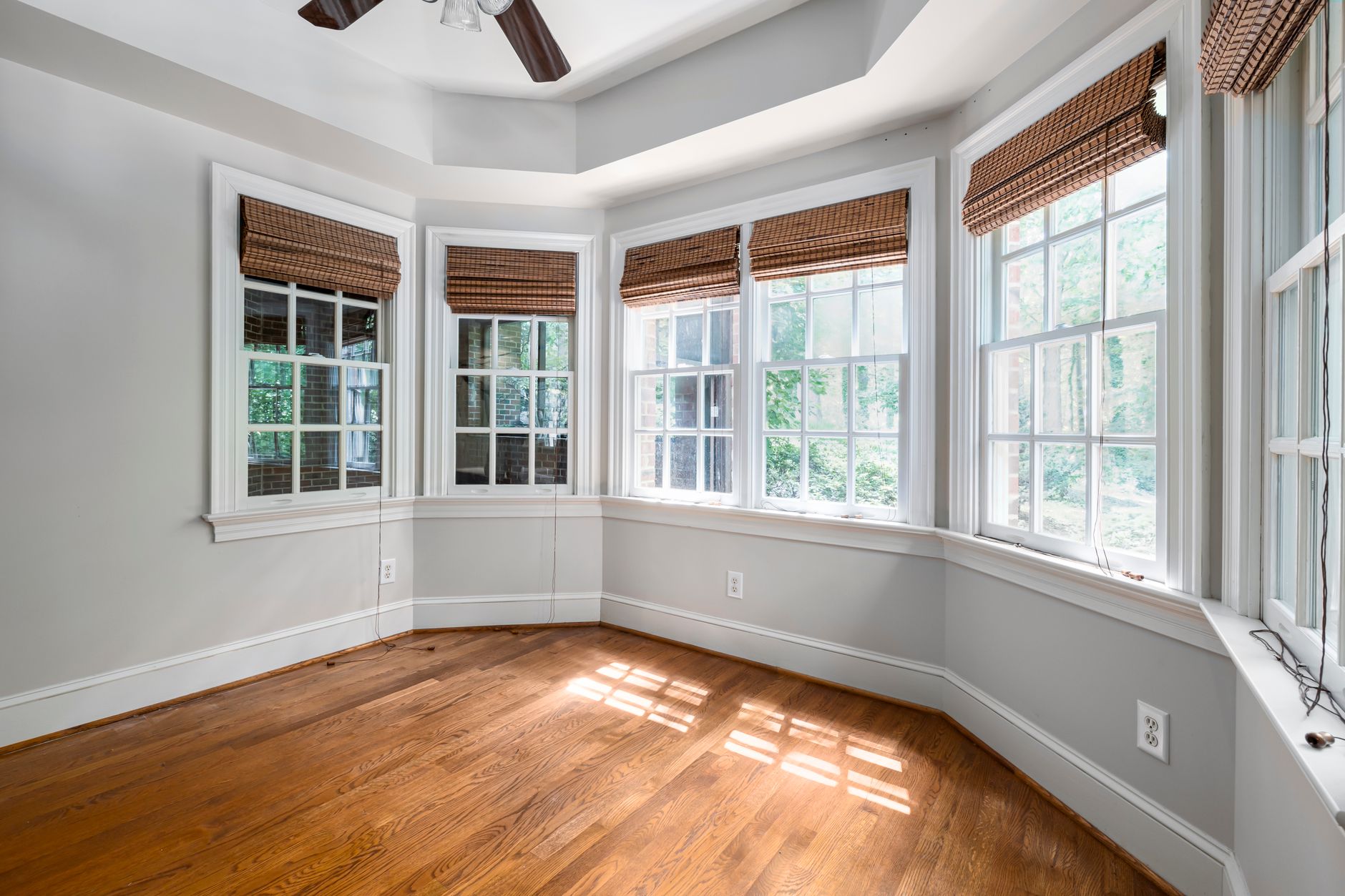
Spacious room with bay windows and a wooden floor

What Happens Inside the Room After Old Windows Come Out of a Mid Century House

2026-10-20

The new window gets all the attention, but the inside of the wall decides how the finished job looks and performs. When an aluminum window from the 1950s or 1960s comes out, the room is left with a rough opening, bare framing, a gap around the edge and a ring of damaged paint. How each of those is handled separates a clean job from one that shows its seams for years.

Houses in San Bernardino from that era were built with a few common interior details, and most of the questions below come from them.

What is a drywall return and why does it matter?

A drywall return is the short strip of drywall that wraps the thickness of the wall at the window opening, running from the inside face of the wall to the window frame. Many mid century houses have no wood casing around the windows at all. The drywall simply turns the corner and ends at the aluminum frame, which has a thin flange that hid the joint.

When the aluminum frame comes out, that flange goes with it. The edge of the drywall is left raw, often cracked or crumbled where the old frame was screwed in. A new vinyl or fiberglass frame sits in a slightly different position, so the return has to be cut back, patched and finished to meet it.

How wide is the gap around a new window, and what fills it?

The gap between the new frame and the framing is usually about a quarter to a half inch on each side. That space lets the installer shim the unit plumb and level, and it has to be filled to stop air and sound.

The filler is a low expansion foam made for windows. Regular foam expands with enough force to bow the frame and jam the sash, which is the most common way a new slider ends up sticking. Window foam stays soft, fills the cavity and cures without pushing. Where the gap is wide, backer rod goes in first and sealant goes over it.

Fiberglass batting stuffed in by hand is the old method, and it leaves voids. Air moves around it, and moisture settles in it. Foam seals to both the frame and the wood, so it keeps the cavity closed.

What are the choices for finishing the inside edge?

There are three common ways to finish the inside of the opening, and each suits a different house:

  • A drywall return, taped, mudded, sanded and painted, which gives the clean modern look many mid century rooms already had
  • A wood or composite stool and apron, which is a flat sill with a trim piece beneath it, plus casing on the sides and top
  • A vinyl or fiberglass interior jamb extension, a flat piece that comes from the factory and covers the opening depth

The drywall return matches the original look and is the least visible once painted. Wood trim adds a defined edge and hides small gaps, and it costs more labor than a return. A jamb extension is quick, but it only works well where the opening is flat and straight.

Why does the wall sometimes need patching around the window?

The wall needs patching because the old frame was fastened through the drywall and, in some houses, was glued or caulked to it. Removing it tears paper and plaster along the edge. Small nicks fill with joint compound, but a ragged edge means the drywall is cut back to sound material and a new strip is screwed to the framing.

The stucco outside has the same issue. When the nail fin is cut and peeled, a band of stucco around the opening is cut back and patched. The inside and the outside patches are done in separate steps, since stucco needs days to cure and drywall mud needs hours.

How long before the walls can be painted?

Painting waits for the compound to dry through. Joint compound on a small patch is dry in a day if the room is warm, and a thick fill can need two coats with a day between each. A primer coat goes on before paint, because new compound soaks up paint unevenly and shows as dull patches called flashing.

The dry climate in the San Bernardino valley speeds this up in summer. In winter, when the nights are cool and the house is closed up, the compound takes longer. A fan and an open window across the room help, though not while a Santa Ana wind is pushing dust through the house.

What about blinds, curtains and window coverings?

Coverings come down before the work starts, and a few details change when they go back up. A new window may sit deeper or shallower in the wall than the old one. Brackets for blinds that were screwed into the old return land in fresh drywall and need new anchors, so it helps to plan where the hardware will go before the finish coat of paint.

Vinyl and fiberglass frames are rigid, so screws into them need pilot holes. Screws driven straight into a thin vinyl wall can crack it. Mounting into the framing behind the frame or into the trim is the safer way.

Do new windows change how the room feels?

They change it in a few ways that people notice quickly. The glass area often looks slightly smaller because a vinyl frame is wider than the thin aluminum one, and the sash lines are thicker. Light enters differently, since a low e coating gives the glass a faint tint, usually noticeable only in side by side comparison with an older pane.

The air changes more than the light. A room that used to carry a faint draft along the sill stops doing it. Rattling at night during windy weather fades, and the sounds from the street and from passing trains drop in volume. Those changes show up on the first windy evening, which is when a well sealed unit proves itself.

What should be checked once the crew has left?

A short walk through the room confirms the work. Slide or swing each sash through its full range and lock it. Look at the sealant lines inside and out for gaps or smears. Run a hand along the trim and the returns to feel for rough spots or loose edges.

Check the weep holes at the bottom of the frame, the small slots that let water leave the frame. They should be clear and unpainted. Painted shut weep holes trap water in the sill track, which brings back the condensation problems of the old window in a new frame.

Finally, look at the glass. Stickers and manufacturer labels peel off in a few days, and a tempered mark in the corner is normal. A lite with any scratches or chips is noted right away, because the factory can only act on a defect reported promptly.

Where do the old windows go?

The old frames are cut out, carried out through the room and loaded for scrap. Aluminum is recycled readily, and the glass is separated because it cannot go with the metal. A tarp under the work area catches fragments, and a vacuum with a fine filter finishes the floor so the dust that comes from stucco and drywall does not stay in the house.

The interior of a replacement job is where the care shows. A tight foam fill, a clean return and a primed patch make the window look like it was always there.
Read more →

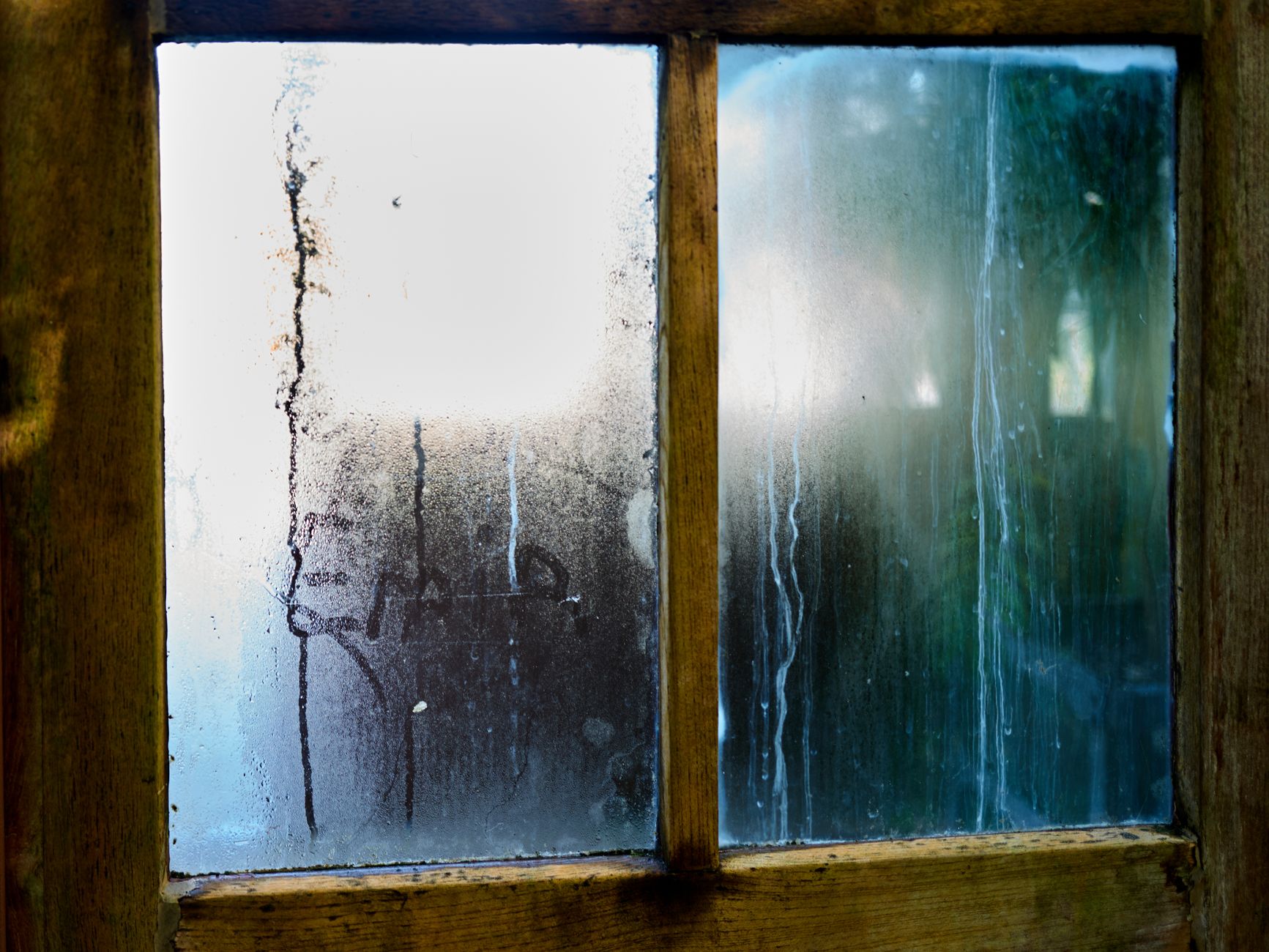
Close view of condensation streaking down a window pane

Why Old Aluminum Windows Sweat, Leak Air and Stick in San Bernardino Houses

2026-10-20

Aluminum conducts heat far faster than wood, and that one fact explains most of what goes wrong with the windows that came with houses built in the 1950s and 1960s. The frame is a metal bar running straight through the wall, from the cold outdoors to the warm indoors, and everything else follows from it. Water beads on it, air slips around it and the sash drags in its track as the metal and the house move at different rates.

Every symptom below has a specific cause, and the cause decides whether a window can be repaired or needs to be replaced. Sorting them out before calling anyone saves a lot of guessing.

Why does water bead on the inside of an aluminum frame?

Water beads on the frame because the metal is colder than the room air, and warm moist air turns to liquid when it touches a cold surface. In San Bernardino this shows up on winter mornings, when the night drops well below the temperature indoors and cooking, showers and breathing have loaded the house with moisture.

The beads collect at the bottom of the frame, run into the track and sit there. On a slider the track is a shallow metal channel with weep holes drilled through the outside lip. When those holes plug with dust, the water has nowhere to go and it spills onto the sill or soaks into the wall below.

Condensation on the glass itself is a different story. On a single pane it means the glass is cold, which is normal. On a double pane unit it should never happen on the inside faces, and if it appears between the panes the seal has failed.

Why do drafts come through a closed window?

Drafts come through because the weatherstripping has worn flat, the frame has shifted or the sash no longer meets the frame evenly. A closed slider has no gasket that compresses. It relies on a strip of pile, a short brush of fibers, riding against the frame as the sash slides. Pile loses its stiffness after a few decades of sun and dust.

A simple test finds the leaks. On a breezy day, hold a stick of incense or a thin strip of tissue near the meeting rail, the corners and the bottom track. Any flutter or smoke drift marks an air path. The leak at the corners is usually the frame itself, where mitered aluminum extrusions were joined with screws and small gaps opened over the years.

Where the air gets inUsual causeWhat fixes it
Meeting rail between sashesFlattened pile stripNew pile or a replaced sash
Bottom trackWorn track, plugged weep holesCleaning, or new window
Frame cornersOpened mitersSealant, or new window
Around the frame outsideCracked stucco jointCutting out and recaulking
Through the wall behind the trimMissing or dried insulation gapFoam sealant, best done in a replacement

Why does a slider stick or jump out of its track?

A slider sticks because the rollers wore out, the track bent or grit built up where the wheels ride. The sash of a mid century slider sits on two small nylon or steel wheels, and the whole weight of a pane of glass rides on them. After sixty years the wheels flatten, and the sash starts to scrape the track instead of rolling on it.

Dust makes it worse. The valley collects a fine gray grit, especially when the Santa Ana winds blow, and it packs into the track. A stiff brush and a vacuum clear most of it, and a dry silicone spray, not oil, keeps the wheels moving without making a paste. Oil collects dust and turns to sludge.

A track that is bent, usually from someone forcing the sash or lifting it out, cannot be straightened well. Aluminum work hardens and cracks if it is bent back. When the track is damaged, the choice is to live with it or to replace the whole unit.

How can a window be checked for rot and rust behind the frame?

The frame itself does not rot, but the wall behind it can. Aluminum does corrode, a white powdery crust that forms where water sits, and that powder is an early sign of a moisture problem. Check three places: the lower corners of the frame, the sill beneath it and the stucco under the sill.

A stain that runs down the stucco from a lower corner points to water getting in through the frame joint. A soft spot in the interior sill, or paint bubbling on the drywall under the window, points to water that has already gotten past it. Press a thumbnail against the wood trim inside. If it dents, the wood is wet or decayed, and the wall behind the window needs to be opened and looked at.

What does a failed double pane seal look like?

A failed seal looks like fog or a faint film between the two panes that cannot be wiped off. Some of the aluminum windows in this area were upgraded later with double pane units, and those can fail the way any insulated glass unit does. The edge seal breaks down from heat cycling, moisture gets between the panes and the drying agent in the spacer saturates.

On hot afternoons the fog often clears, then returns in the morning. That pattern is a clear sign. The glass unit can be replaced alone if the frame is sound, though on an aluminum frame that is already leaking air, replacing the entire window is usually the more sensible move.

When is repair enough and when is replacement the answer?

Repair makes sense for a single worn part on an otherwise tight window. New rollers, a fresh pile strip and a cleaned track can make a slider glide again for years. Replacement makes sense when several of the symptoms above appear together, since they all trace back to the same aging frame.

A short checklist helps decide:

  • Beads of water collect on the frame every cold morning
  • The sash drags even after the track is cleaned and the rollers replaced
  • Incense smoke drifts at the corners as well as the meeting rail
  • Stains or soft wood show up below the window
  • Street noise from the freeway or the rail line comes through clearly

Three or more of those make a strong case for replacement. One or two usually point to a repair.

What changes with a new vinyl or fiberglass frame?

A vinyl or fiberglass frame is a poor conductor, so the frame stays near room temperature and the beading stops. The frame also has hollow chambers that trap air, and the sash closes against a compression gasket instead of sliding past a pile strip. A well fitted nail fin window seals against the stucco with flashing and sealant on all four sides, so the draft paths through the wall are closed too.

The glass changes as well. A double pane unit with a low e coating holds the room temperature far better than a single sheet of glass, and the inside glass surface stays warmer, which keeps condensation off it. The older neighborhoods near the foothills and the area around the old Arrowhead Springs Hotel site swing from cold nights to hot days, so a window that handles both ends of that range is useful.

Does the order of repairs matter?

The order matters when the wall is wet. Any moisture damage is dealt with first, because a new window set into damp framing starts failing at once. The old window comes out, the framing is checked and dried, a sill pan and flashing go in, and only then does the new unit get set and sealed. Skipping the pan is the most common shortcut and the most expensive one over time.

If the plan is to replace only a few windows, start with the ones on the west and south walls. They take the heat, the sun fades the interior and the frames there have aged the fastest. Bedrooms facing a busy road are a close second, since sleep is where noise is felt most.

Quick answers

Is condensation on single pane glass a defect? No, it is expected when the glass is cold and the room is humid. Does a draft always mean a bad window? Not always, since the stucco joint outside is often the real leak. Can a stuck slider be fixed in an afternoon? Often yes, if the track is straight and only the rollers and grit are the problem.

The window tells the story if it is watched across a few seasons. Note when it sweats, where the air moves and how the sash feels, and the decision between repair and replacement becomes straightforward.

Read more →